
Noise Action Values Assessment
80 dB(A)
Lower action value
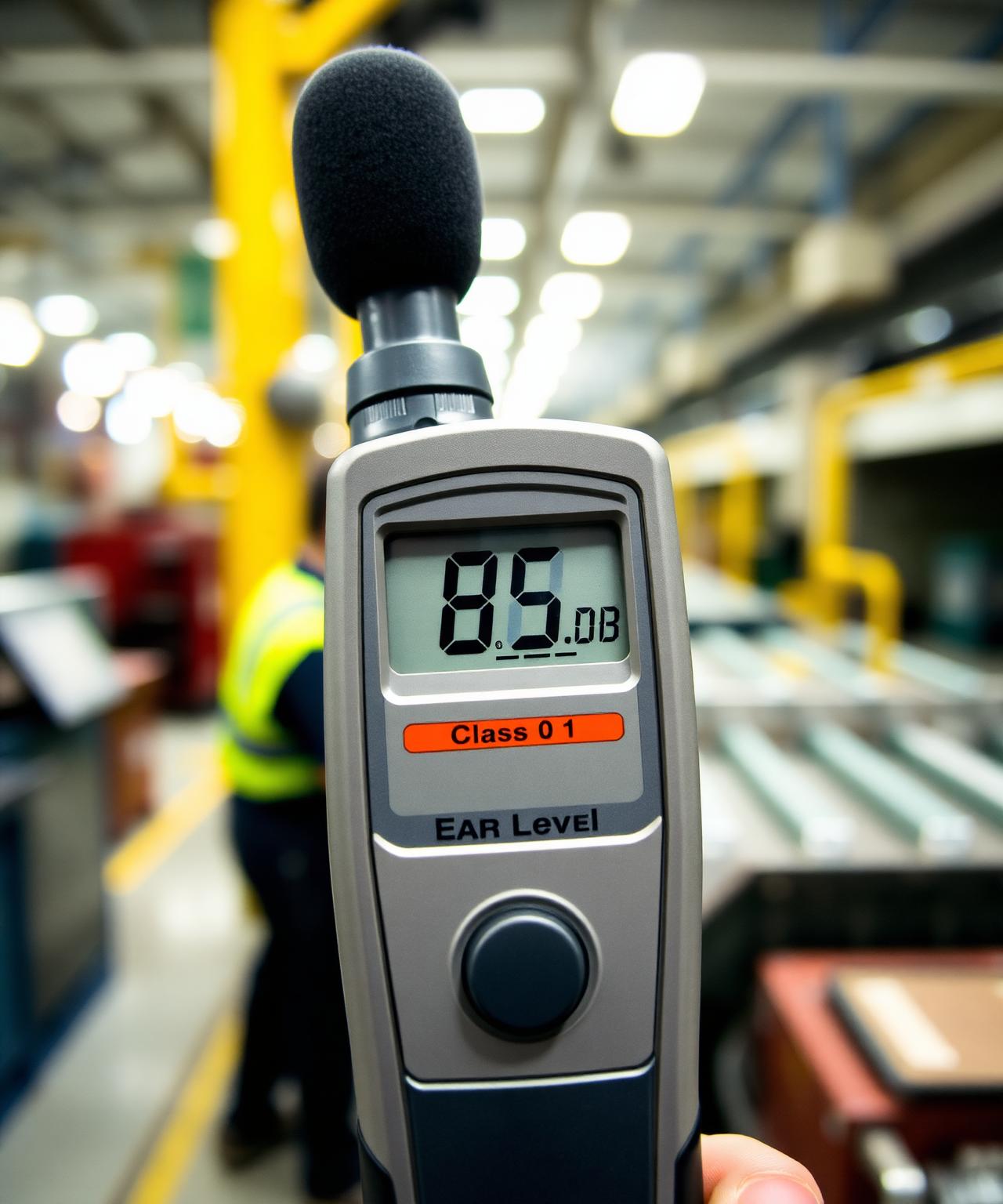
85 dB(A)
Upper action value
87 dB(A)
Exposure limit value
Action-value comparison
Per worker · per SEG
What it is
Action-value comparison as a stand-alone service
Workplace noise duties under the Control of Noise at Work Regulations 2005 hinge on three thresholds: the lower exposure action value, the upper exposure action value and the exposure limit value. Each triggers specific employer duties.
This service answers a narrow but important question: which thresholds are exceeded, by whom, and where? It complements broader workplace noise surveys and the regulatory context on the noise at work regulations page.
Thresholds
The three thresholds
Lower action value (80 dB(A))
Triggers information, instruction and training; provision of hearing protection on request; risk-assessment update.
Upper action value (85 dB(A))
Triggers mandatory use of hearing protection, hearing protection zones, control measures and health surveillance.
Limit value (87 dB(A))
Must not be exceeded — assessed under hearing protection; immediate action where exceeded.
Peak values
Peak (LCpeak) action and limit values
- Lower peak action value: 135 dB(C)
- Upper peak action value: 137 dB(C)
- Peak limit value: 140 dB(C)
- Press, stamping and impact noise
- Pneumatic discharge and ejection
- Tool engagement and disengagement
Approach
How the assessment is delivered
- 1
Define worker groups
Similar exposure groups defined from role, tasks, machinery and shift pattern.
- 2
Measure
Class 1 sound-level measurements and personal dosimetry across representative shifts.
- 3
Calculate
LEX,8h, weekly exposure (where justified) and LCpeak per worker or SEG.
- 4
Compare
Direct comparison against the three thresholds, with assumptions documented.
- 5
Report duties
A clear statement of which duties apply to which workers and areas, with prioritised next steps.
Duties triggered
Duties triggered at each threshold
- Information, instruction and training
- Provision of suitable hearing protection
- Mandatory wearing of hearing protection
- Marking and signing of protection zones
- Engineering and administrative controls
- Health surveillance / audiometry
- Records and review schedule
Use cases
When this assessment is the right scope
- Single area or single task focus
- Single shift or short-duration jobs
- Verifying threshold exceedance
- Supporting hearing protection zone decisions
- Pre-checks before a full survey
- Verifying control effectiveness
FAQ
Noise action values — frequently asked questions
What are the noise action values?+
Under the Control of Noise at Work Regulations 2005 the lower exposure action value is 80 dB(A) LEX,8h with a peak value of 135 dB(C); the upper exposure action value is 85 dB(A) LEX,8h with a peak value of 137 dB(C); the exposure limit value (under hearing protection) is 87 dB(A) LEX,8h with a peak of 140 dB(C).
What is the difference between an action value and a limit value?+
Action values trigger duties — assessment, information and training, provision of hearing protection, marking of hearing protection zones and the implementation of control. The exposure limit value is the level employees must not be exposed to once the attenuation of hearing protection is accounted for; it must never be exceeded.
What does this service assess?+
This is a focused exposure-and-action-value assessment. It quantifies LEX,8h, weekly exposure where appropriate, and LCpeak for each worker or similar exposure group, then sets out exactly which duties are triggered for which roles and which areas.
Is weekly averaging permitted?+
Weekly averaging may be used where work patterns vary markedly from day to day — for example shift-based or short-duration high-noise tasks — provided the conditions in CNWR 2005 are met. Where used, it is documented explicitly in the assessment.
How is the peak action value applied?+
Peak (LCpeak) is assessed separately. Even where time-averaged exposure is moderate, single high-energy events — impact, stamping, gunshot-like discharges — may exceed the peak action value or the peak limit value and trigger additional duties.
How does this differ from a general noise survey?+
A general workplace noise survey is broader in scope. This service is focused specifically on the action-value comparison and the duties it triggers — useful where the principal question is whether action values are exceeded, by whom, and where.