
Workplace Acoustic Surveys
Workplace acoustic surveys assess how sound behaves across operational spaces — identifying excessive reverberation, poor communication conditions, machinery-noise spread and practical acoustic-control opportunities for UK factories, warehouses, workshops and large commercial workplaces.
Reverberation
Where justified
Sound spread
Across the workspace
Controls
Practical & site-specific
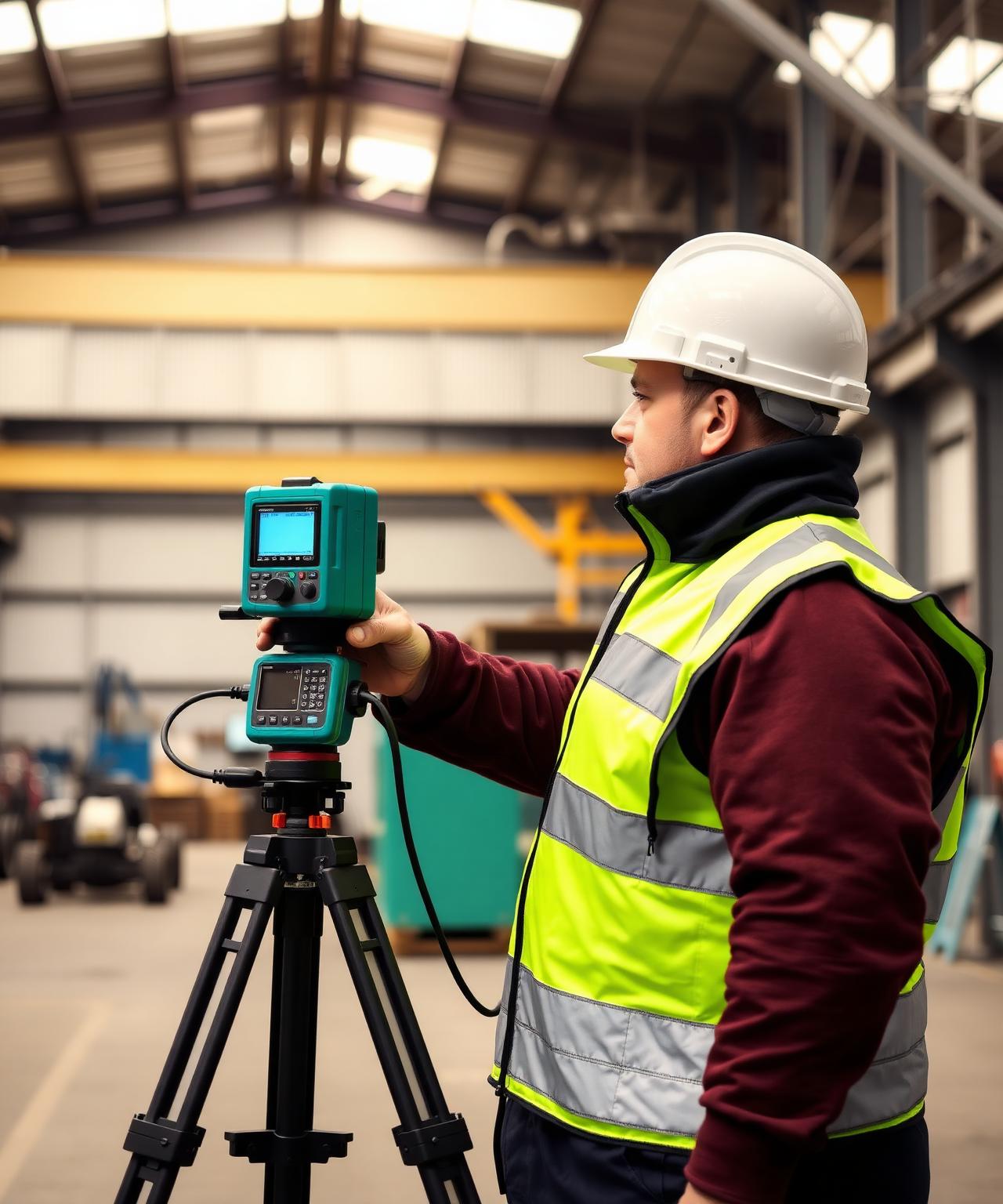
Industrial acoustics assessment
Reverberation, sound spread & control
What it is
What is a workplace acoustic survey?
A workplace acoustic survey is a measurement-led assessment of how sound behaves inside an operational workspace. It looks at room size, surfaces, layout and machinery to understand why noise spreads or builds up, how communication is affected and where practical acoustic-control opportunities exist.
Workplace acoustics influences perceived loudness, the audibility of alarms and announcements, the ease of supervision and the comfort of workers and visitors. A reflective, reverberant space can make machinery noise feel more intrusive, mask warning signals and erode speech intelligibility even where individual source levels are modest.
An acoustic survey is distinct from a standard occupational noise exposure assessment. The two can be complementary: an acoustic survey explains how sound behaves in the space, while an occupational noise assessment quantifies exposure for the workers within it. See our workplace noise surveys service for occupational exposure work.
When you need a survey
When a workplace acoustic survey is needed
- Excessive echo or reverberation
- Difficulty communicating across the workspace
- Alarms or announcements being difficult to understand
- Machinery noise spreading across large areas
- Complaints about general sound build-up
- Changes to layout or production patterns
- Installation of new machinery
- Large hard-surfaced rooms
- Warehouses or factories with reflective roofs and walls
- Acoustic treatment being considered
- Existing controls not performing as expected
- Areas with multiple simultaneous sound sources
Occupational vs acoustic
Occupational noise versus workplace acoustics
Two distinct types of assessment, often used together. One focuses on worker exposure; the other on how sound behaves within the workspace.
Occupational noise assessment
- • Focuses on worker exposure
- • Considers LEX,8h and peak exposure
- • Supports Noise at Work compliance
- • Identifies employee groups at risk
Workplace acoustic assessment
- • Examines sound distribution within spaces
- • Considers reverberation and reflection
- • Assesses communication conditions
- • Supports acoustic-control design
- • Helps understand why noise spreads
One assessment may identify the need for the other — for example, acoustic findings may prompt a personal exposure review, and exposure findings may suggest acoustic treatment.
Sound propagation
Sound propagation in workplaces
Sound rarely travels by a single path. Reducing one source may improve conditions locally without resolving the wider acoustic problem.
- Direct sound paths from source to receiver
- Reflections from walls, ceilings and equipment
- Hard concrete or coated floors
- Profiled metal roofs and wall cladding
- Open production areas without separation
- Interconnected and adjoining spaces
- Doors and large openings between zones
- Structural elements transmitting vibration
- Ducts, services and ventilation paths
- Multiple machinery sources operating concurrently
Reverberation
Reverberation and sound build-up
Reverberation describes how sound persists in a space after the source has stopped. Reflective surfaces — concrete floors, metal cladding, glazing and bare ceilings — return acoustic energy back into the room, prolonging sound and contributing to a sense of loudness and fatigue.
Large factories, warehouses and workshops are particularly prone to sound build-up. In some cases, treating reverberation can meaningfully improve communication and reduce perceived noise. In others, the dominant issue is source level, and reverberation control alone will have limited effect. Reverberation control does not automatically replace source-noise control.
Speech & communication
Communication and speech intelligibility
Background noise, reverberation and hearing protection interact. Improving acoustic conditions can support clearer communication — though formal speech-intelligibility testing is only included where it is part of the agreed scope.
- Face-to-face communication on the floor
- Two-way radio communication
- Production and process instructions
- Safety briefings and toolbox talks
- Warning announcements over PA
- Team coordination during tasks
- Emergency instructions and evacuation calls
- Supervision across larger work areas
- Visitor and contractor communication
Where workers also rely on hearing protection, comfort, fit and communication needs should be reviewed together — see hearing protection assessment.
Alarms & warning signals
Alarms and warning signals
Acoustic conditions affect whether alarms and announcements are heard and understood. Specialist alarm-system or PA-system testing may be required where it is critical to the workplace.
- Audibility above background noise
- Recognisability of alarm tones
- Masking by machinery and process noise
- Reverberation distorting alarm sounds
- Changing background levels through the shift
- Workers moving through different zones
- Hearing protection in use during exposure
- Vehicle reversing and movement alarms
- Fire and emergency alarm systems
- Public-address and announcement systems
What the survey may include
What the survey may include
Not every project includes every element. Scope is confirmed during consultation and reflects the workspace, objectives and operational constraints.
- Initial consultation and objectives
- Workplace walkthrough under operating conditions
- Review of room geometry, surfaces and finishes
- Identification of dominant sound sources
- Area sound-level measurements
- Background-noise measurements where appropriate
- Spatial measurements across the workplace
- Observation of communication conditions
- Reverberation measurements where justified
- Machinery-operating observations
- Review of existing acoustic treatments
- Identification of reflective surfaces and pathways
- Practical acoustic-control recommendations
- Clear technical reporting
Measurement methodology
Measurement methodology
Calibrated instruments, representative positions and operational observation underpin the measurements. Background on representative sound measurement is on the workplace noise monitoring page.
Calibrated sound-level meters
Class 1 or Class 2 integrating sound-level meters with pre- and post-survey calibration.
Representative positions
Measurements at locations that reflect how the space is actually used.
Repeated measurements
Repeats across operating conditions to characterise variation rather than a single snapshot.
Controlled sources where needed
Use of controlled sound sources for reverberation-time assessment where appropriate.
Reverberation assessment
Measurement of reverberation time where it is justified by the workspace and scope.
Operational observation
Documented review of activities, machinery duty and movement during measurements.
Production-state coverage
Comparison of different operating states where they alter the acoustic environment.
Treated versus untreated comparison
Comparison between treated and untreated areas where this informs recommendations.
Reverberation assessment
Workplace reverberation assessment
Reverberation-time measurement is included where it is justified by the workspace and the project objectives. Target values depend on room function and use, rather than a single universal figure.
- Reverberation time may be measured to characterise the space
- Helps describe how reflective surfaces prolong sound
- Operating conditions affect what can be measured directly
- Machinery noise can limit reverberation-time measurement
- Results are interpreted against room use and communication needs
- Target values depend on space function and project scope
- Reverberation is one indicator — not a universal target
Machinery distribution
Machinery and production noise distribution
Multiple sources interact through direct and reflected paths. For dedicated production-line work, see factory noise surveys.
- Dominant production noise sources
- Direct and reflected sound from each source
- Multiple machines operating simultaneously
- Line-of-sight effects between source and worker
- Existing barriers, screens and enclosures
- Operator positions relative to sources
- Sound spreading into adjacent work areas
- Production-line configuration and orientation
- Changing operating states across the cycle
- Interaction between continuous and intermittent sources
Acoustic-control options
Acoustic-control options
Recommendations must consider fire safety, hygiene, cleaning, maintenance, access and production requirements. No single option suits every workplace.
- Source reduction at the noisiest machines
- Machinery enclosure or partial enclosure
- Partial screens and acoustic barriers
- Absorption on walls or ceilings
- Suspended acoustic baffles and rafts
- Local treatment near noisy processes
- Separation of noisy and quiet activities
- Layout and workflow changes
- Sealing openings and gaps in barriers
- Reducing structural vibration transmission
- Maintenance of existing acoustic controls
- Selection of quieter equipment for replacement
Absorption & treatment
Acoustic absorption and treatment
Absorption and insulation are not the same thing. Effective treatment depends on placement, surface area and suitability for the environment.
- Absorption reduces reflected sound, not insulation between rooms
- Random placement of soft materials may not solve the problem
- Surface area and placement determine effectiveness
- Durability in industrial environments matters
- Contamination risk from dust, oil and food residues
- Cleanability and washdown compatibility
- Fire performance and building-regulation compliance
- Suitability for food, manufacturing and dusty environments
- Need to avoid obstructing services, ventilation or lighting
Barriers & enclosures
Acoustic barriers and enclosures
Acoustic controls require site-specific design. Barriers and enclosures must avoid introducing new hazards around ventilation, heat, access or emergency egress.
- Interruption of direct line of sight to the source
- Barrier height and lateral extent
- Avoiding gaps, openings and flanking paths
- Partial versus full enclosure options
- Operator access and process visibility
- Ventilation and heat dissipation
- Maintenance and inspection access
- Emergency access and egress routes
- Avoiding the creation of new workplace hazards
Factories & production areas
Factories and production areas
Acoustic conditions in factories are shaped by reflective surfaces and overlapping sources. For production-focused noise work, see factory noise surveys. For boiler houses, chiller plants and mechanical services see our plant room noise surveys page.
- Reflective concrete and coated floors
- Profiled metal roofs and wall cladding
- Multiple machinery sources distributed across the floor
- High ceilings and tall internal volumes
- Open production layouts with limited separation
- Impact noise from forming and material handling
- Compressed-air discharge and pneumatic processes
- Conveyors and material-transport systems
- Communication difficulties between operators
- Hearing-protection zones across production areas
Warehouses & logistics
Warehouses and logistics spaces
Large reflective volumes, vehicle movements and changing occupancy create distinctive acoustic conditions across the working day.
- Large reflective volumes with hard finishes
- Forklift and vehicle movements
- Loading and unloading activity
- Reversing alarms and movement signals
- Public-address and announcement systems
- Impact noise from product and pallet handling
- Racking influencing local reflections
- Roof and wall reflections across the space
- Communication between mobile workers
- Changing occupancy and activity through the day
Workshops
Workshops and engineering spaces
Smaller, mixed-use rooms can present acoustic challenges of their own — quiet and noisy tasks often share the same space.
- Fabrication, grinding and cutting activities
- Welding-support equipment and extraction
- Power tools used intermittently
- Metal impact and product handling
- Local extraction and ventilation systems
- Compressors and pneumatic supply
- Smaller, reflective enclosed rooms
- Mixed quiet and noisy tasks within one space
Layout & zoning
Workplace layout and zoning
Survey findings can inform how the workplace is laid out and where controls are most likely to be effective. Mobile workers may also benefit from personal noise dosimetry in parallel.
- Separation of noisy and quiet work
- Locating fixed workstations away from dominant sources
- Protection of welfare and break areas
- Communication routes and supervision corridors
- Hearing-protection-zone definition
- Machinery relocation opportunities
- Barrier and screen placement
- Acoustic-treatment priorities by zone
- Visitor and contractor routing
- Office-to-workshop acoustic interfaces
What the client receives
What the client receives
- Description of the workplace acoustic conditions
- Measurement locations and methods used
- Sound-level findings across the workspace
- Reverberation findings where measured
- Identification of dominant sound sources
- Observations on communication and audibility
- Acoustic-control opportunities and options
- Treatment priorities and sequencing
- Limitations and assumptions of the assessment
- Recommendations for further assessment where needed
- Clear written technical report
- Practical next steps for the site
A workplace acoustic survey provides competent measurement-led advice on acoustic conditions and practical controls. It does not constitute legal certification or a guarantee of acoustic performance.
Acoustics & exposure
Relationship with employee exposure
Workplace acoustic improvement may reduce general sound build-up, reverberation and the spread of noise into adjacent areas, but it does not on its own demonstrate compliance with the Control of Noise at Work Regulations 2005. Employee exposure depends on source levels, task duration and work patterns and continues to be assessed in its own right.
Where the workspace is acoustically demanding, personal monitoring may still be required for representative workers. See noise exposure assessment for exposure interpretation, workplace noise monitoring for representative measurement, and personal noise dosimetry for mobile workers.
Common mistakes
Common workplace-acoustics mistakes
- Treating surfaces without measurements
- Confusing absorption with sound insulation
- Ignoring the main machinery source
- Adding barriers with large gaps or flanking paths
- Obstructing ventilation, access or services
- Ignoring cleaning, hygiene or fire requirements
- Relying on a single measurement position
- Assessing an unrepresentative operating condition
- Assuming lower reverberation proves exposure compliance
- Failing to consider alarms and communication needs
- Installing treatment without reviewing the result
- Using domestic acoustic materials in industrial environments
Industries supported
Industries and workplaces supported
Workplace acoustic surveys for a range of UK industrial and commercial environments, including:
Manufacturing facilities
Factories
Engineering workshops
Fabrication areas
Warehouses
Logistics centres
Production halls
Packaging facilities
Recycling centres
Plant rooms
Maintenance workshops
Large commercial workspaces
Mixed office and industrial areas
Why us
Why choose Workplace Noise Surveys
Occupational and workplace focus
Acoustic assessment delivered for operational workplaces, not residential or entertainment contexts.
Measurement-led approach
Recommendations anchored in calibrated measurements rather than assumption or product preference.
Operational understanding
Findings interpreted with production, access, hygiene and maintenance constraints in mind.
Integrated with exposure assessment
Acoustic findings sit alongside occupational noise exposure work where both are relevant.
Practical control recommendations
Options framed for what is realistic and reasonably practicable on site.
Industrial and commercial context
Experience across factories, warehouses, workshops and large commercial spaces.
Clear technical reporting
Reports written for managers, engineers and SHEQ teams rather than specialists only.
UK regulatory awareness
Recommendations developed with the Control of Noise at Work Regulations 2005 in mind.
Green Air Monitoring network
Supported by the wider Green Air Monitoring occupational hygiene network.
See our broader workplace noise surveys, production-focused factory noise surveys, supporting workplace noise monitoring, and UK regulatory context on noise at work regulations. Learn more about us or get in touch.
FAQ
Workplace acoustic survey FAQs
What is a workplace acoustic survey?+
A workplace acoustic survey is a measurement-led assessment of how sound behaves inside an operational workspace. It examines sound levels, sound distribution, reflective surfaces, machinery contributions and, where appropriate, reverberation, so that practical acoustic-control opportunities can be identified for an industrial or commercial environment.
How is an acoustic survey different from a workplace noise survey?+
A workplace noise survey is an occupational assessment focused on employee exposure against the Control of Noise at Work Regulations 2005. A workplace acoustic survey examines how sound behaves within the space itself — reflections, sound build-up, communication conditions and the spread of machinery noise — and supports acoustic-control decisions rather than personal exposure compliance.
What is workplace reverberation?+
Reverberation describes how sound persists in a space after the source has stopped, as energy reflects from walls, floors, ceilings and equipment. Large rooms with hard, reflective surfaces — such as factories, warehouses and workshops — often show extended reverberation, which can increase perceived loudness and degrade communication.
Can poor acoustics make machinery noise seem worse?+
Yes. Reflective surfaces and overlapping sources can cause sound to build up across a space, so workers hear both direct machinery noise and substantial reflected sound. Improving the acoustic environment will not always reduce a worker's individual exposure significantly, but it can reduce general sound build-up, fatigue and communication difficulty.
Can an acoustic survey help improve communication?+
It can. Survey findings can identify reflective surfaces, dominant background noise and reverberation that interfere with face-to-face speech, radio communication, alarms and announcements. Recommendations may include absorption, screening, layout changes or alarm-system review, depending on the scope agreed.
What measurements are taken during the survey?+
Surveys typically include calibrated area sound-level measurements at representative positions, background-noise measurements, observation of operating conditions and — where justified — spatial measurements and reverberation-time assessment. The exact methods depend on room size, the activities present and the survey scope.
Can the survey recommend acoustic panels or barriers?+
Recommendations may include absorption on walls or ceilings, acoustic baffles, partial screens, machinery enclosures and layout changes. We describe the role each option could play and the constraints to consider — including fire performance, cleaning, hygiene, access and ventilation — without endorsing specific products.
Will acoustic treatment reduce employee noise exposure?+
Not automatically. Treatment usually reduces reflected sound and reverberation rather than the level at the source. Personal exposure depends on source levels, task duration and work patterns, and continues to be assessed through occupational noise exposure assessment and personal dosimetry where required.
Can factories and warehouses be assessed while operating?+
Yes — and they should be. Measurements taken under representative operating conditions reflect the acoustic environment workers actually experience. Where reverberation-time measurement requires controlled conditions, a separate quieter window may be scheduled alongside the operational survey.
Do all workplace acoustic surveys include reverberation measurements?+
No. Reverberation measurement is included where it is justified by the workplace and the survey objectives. For some sites, area sound-level measurements, observation and identification of dominant reflective surfaces are sufficient to inform practical recommendations.
Can alarm and warning-signal issues be considered?+
An acoustic survey can include observations on audibility, masking by machinery and reverberation effects on alarms, public-address systems and warning announcements. Where formal alarm-system testing or speech-intelligibility measurement is required, that work is scoped explicitly rather than assumed.
Should acoustic conditions be reviewed after workplace changes?+
Yes. New machinery, revised layouts, additional racking, changed production patterns or new acoustic treatment can all alter the acoustic environment. A focused reassessment after significant changes confirms whether previous findings remain valid and whether further acoustic-control measures are needed.
Arrange a Workplace Acoustic Survey
Speak to a UK workplace acoustics specialist about a survey for your factory, warehouse, workshop or commercial workspace. We respond to most enquiries the same working day.