
Workplace Noise Control Measures
Hierarchy of control
Source-led
Machine-specific
Not catalogue advice
Post-install check
Verified reduction
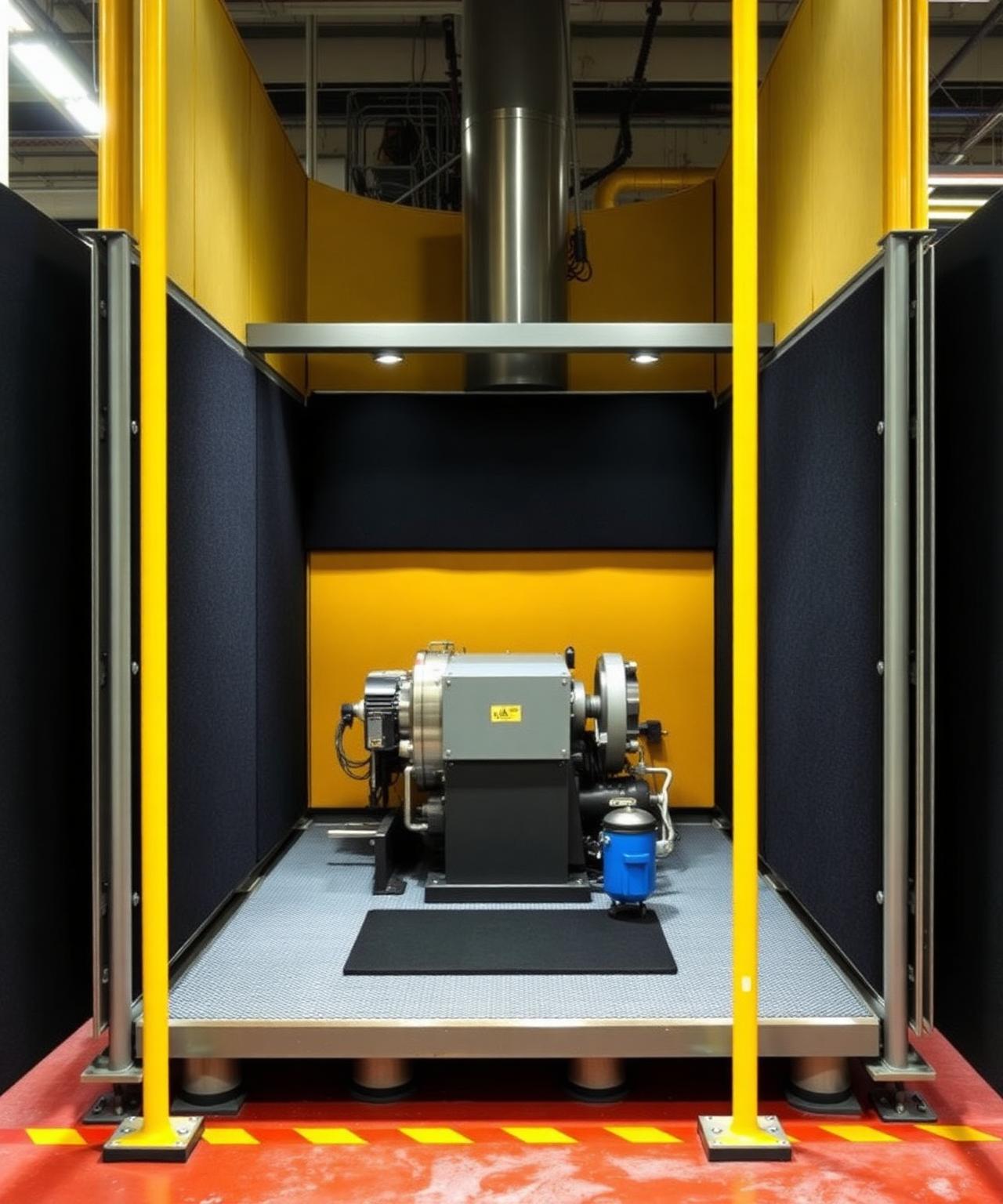
Engineering noise control
Assess · design · verify
What it is
Source-led noise control, properly assessed
Workplace noise control means making the workplace quieter at source rather than relying on hearing protection. It is the most effective, most durable and most defensible response to high exposure, but it depends on understanding which sources actually drive operator exposure and where reduction is reasonably practicable.
This service complements workplace noise surveys, machinery noise surveys and our noise control in industry guide.
Hierarchy
The hierarchy of noise control
Eliminate / substitute
Remove the source, change the process or specify quieter equipment at purchase.
Engineering at source
Modify machinery, fit silencers, damp resonant panels, isolate vibration.
Path control
Enclosure, screens, partitions, acoustic absorption and operator positioning.
Administrative
Task duration and rotation, work scheduling, restricted access and supervision.
Engineering controls
Engineering control opportunities
- Quieter equipment substitution
- Acoustic enclosures and cabins
- Damping treatment on panels
- Vibration isolation mounts
- Silencers on intakes and discharges
- Air-line nozzles in place of open ends
- Workpiece supports to reduce resonance
- Maintenance access without panel removal
Administrative controls
Administrative control opportunities
- Task duration limits
- Job rotation across exposure groups
- Restricted access during noisy operations
- Scheduling noisy work outside peak shifts
- Hearing protection zone management
- Maintenance and procurement standards
Process
How a control assessment runs
- 1
Source identification
Measurement to identify which sources actually dominate operator exposure, not just which are loudest.
- 2
Path analysis
Evaluation of how noise reaches the operator — airborne, structure-borne, reverberant — and where path control is possible.
- 3
Option appraisal
Practical control options ranked by reduction potential, cost, operational impact and timescale.
- 4
Prioritised plan
A staged plan combining quick wins and capital-project items.
- 5
Post-install verification
Re-measurement after controls are installed to confirm reduction achieved.
Verification
Verification measurements
- Before-and-after operator-position data
- Source contribution re-evaluated
- Side effects (e.g. heat, access) flagged
- Updated LEX,8h per SEG
- Residual hearing protection requirement
- Documentation for compliance record
Capital projects
Integration with capital projects
- New-machinery noise specification
- Layout-change noise modelling
- Acoustic enclosure scoping
- Vendor data verification on installation
- Commissioning measurements
- Handover sign-off
FAQ
Workplace noise control measures — frequently asked questions
What is the noise control measures service?+
A commercial workplace noise assessment focused on identifying, designing and verifying practical noise controls — substitution, engineering control at source, enclosure, damping, isolation, layout and administrative control — in a hierarchy-of-control sequence.
How is this different from your noise-control guide?+
The guide is educational reference content explaining principles of industrial noise control. This page is the commercial assessment service: we measure, identify dominant sources, design and prioritise control opportunities, and verify their effectiveness after installation.
Where do controls come in the hierarchy?+
Eliminate, substitute, control at source, engineering controls, administrative controls, and finally hearing protection. Hearing protection is the last resort — the priority is to make the workplace genuinely quieter rather than to protect ears against an unaddressed hazard.
Will recommendations be specific?+
Yes. Recommendations are framed for your machines, layout, tasks and operating conditions — not catalogue generalities. Where vendor-specific or design-engineering input is needed we say so explicitly.
Do you verify controls after installation?+
Yes. Post-installation verification measurements quantify the reduction achieved, identify any unintended side effects and document the residual exposure for the workforce.
What about hearing protection?+
Hearing protection remains part of the picture while engineering controls are designed and implemented, but it is not the principal solution — see our dedicated hearing protection assessment for that part of the programme.