
Noise Control Measures in Industry
How UK industrial workplaces reduce noise at source, along the transmission path and through organisational measures — applied so far as reasonably practicable before hearing protection is relied on.
Category
Noise control
Audience
Employers & engineering
Scope
UK industrial workplaces
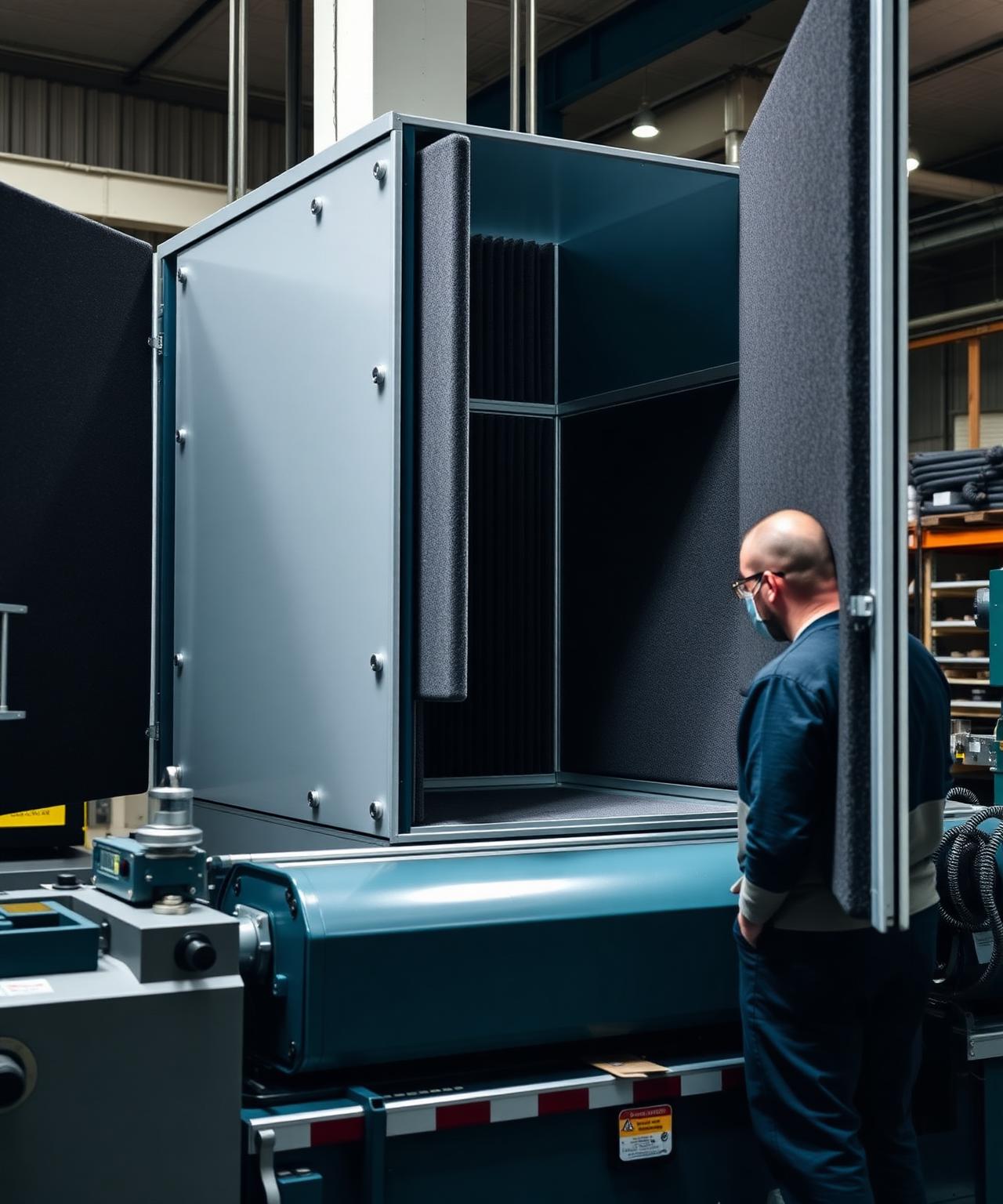
Industrial noise control
Source · path · organisational · PPE
Quick summary
- Source-based control comes first; PPE addresses residual exposure.
- Each workplace needs a tailored, measurement-led plan.
- Absorption and insulation address different problems.
- Maintenance prevents noise drift over time.
- Verification by measurement closes the control loop.
- Organisational controls support — not replace — engineering work.
Why
Why noise control matters
Excess workplace noise causes preventable hearing loss and tinnitus, impairs communication and warning audibility, and creates regulatory exposure under the Control of Noise at Work Regulations 2005. Engineering and organisational control reduce the underlying problem rather than relying on individuals managing residual risk through PPE alone.
Hierarchy
Hierarchy of control
- Elimination of the noisy activity.
- Substitution with quieter equipment or process.
- Engineering controls at source.
- Engineering controls along the transmission path.
- Organisational controls.
- Hearing protection for residual exposure.
Elimination
Elimination
The most effective control is to eliminate the noise-generating activity altogether — for example by removing a redundant process, decommissioning unneeded equipment or stopping habitual blow-off use. Elimination is rarely possible across the board, but it is the first option to consider.
Substitution
Substitution
Substitution replaces noisier equipment or processes with quieter alternatives — for example electric in place of pneumatic tools, gear in place of impact drives, or a different machining strategy that removes a noisy step. Substitution affects production, cost and maintenance and needs to be assessed in context.
Quieter purchasing
Quieter purchasing
Including noise emission as a specification at purchase prevents long-running exposure problems being introduced. Comparing declared noise emission values across suppliers, and writing acceptance criteria into the contract, is more practical than retrofitting controls later.
Source
Source control
- Replacing worn or out-of-balance components.
- Reducing impact and drop heights.
- Modifying tooling to remove impact stages.
- Fitting silencers and mufflers.
- Reducing fan and pump speeds where possible.
- Specifying quieter equipment at purchase.
Enclosures
Machinery enclosures
- Dense panels with sealed joints.
- Internal absorptive linings.
- Vibration isolation from the source.
- Acoustic louvres for ventilation.
- Sealed access doors and viewing panels.
- Designed-in maintenance access.
Partial
Partial enclosures and screens
- Screens between source and operator positions.
- Three-sided enclosures around fixed machinery.
- Acoustic curtains for variable layouts.
- Local barriers around impact processes.
Isolation
Isolation
- Anti-vibration mounts under machinery.
- Resilient pads beneath impact stations.
- Flexible couplings on pipework and ducting.
- Isolated structural connections to building.
Vibration
Vibration control
Structure-borne vibration radiates as airborne noise. Isolating sources, breaking continuous metallic paths and adding mass to radiating surfaces reduces this conversion. Vibration control often complements acoustic control on the same machine.
Damping
Damping
- Constrained-layer damping on panels and chutes.
- Damping treatments on machine casings.
- Mass loading of resonant components.
- Stiffening of large radiating surfaces.
Silencers
Silencers and compressed-air controls
- Reactive silencers on engine exhausts.
- Absorptive silencers on fan and ducting systems.
- Compressed-air discharge silencers.
- Silenced nozzles for blow-off applications.
Impact noise
Impact-noise reduction
- Cushioned drop zones and rubber liners.
- Conveyor speed and material-flow control.
- Soft-start and soft-stop control on tooling.
- Process redesign to remove impact stages.
Conveyors
Conveyor and material-handling controls
- Damped and lined chutes and hoppers.
- Resilient roller mounting.
- Reduced gaps and step-changes.
- Lower drop heights at transfer points.
Maintenance
Maintenance
- Balancing and alignment of rotating equipment.
- Bearing condition monitoring.
- Replacement of worn cushions, seals and silencers.
- Tightening of loose panels and fixings.
- Tracking noise level over time as a leading indicator.
Layout
Layout and separation
- Distance between sources and operator positions.
- Separation of noisy and quiet processes.
- Acoustic-absorbent screening in shared areas.
- Locating noisy equipment outside occupied zones where practicable.
Remote
Remote operation and automation
- Remote operator stations for high-noise machinery.
- Process automation to reduce time in noisy zones.
- CCTV and instrumentation in place of close attendance.
Absorption
Acoustic absorption
- Absorbent ceiling and wall treatments.
- Suspended absorbers in high-bay spaces.
- Targeted absorption around dominant sources.
- Treatment design appropriate to frequency content.
Barriers
Barriers
- Free-standing screens for line-of-sight breaks.
- Mass-rated barriers around fixed sources.
- Combined absorption and barrier panels for reverberant spaces.
Organisational
Organisational controls
- Restricted access to defined hearing protection zones.
- Scheduling noisy tasks to reduce simultaneous exposure.
- Permit-to-work for very high-noise operations.
- Information, instruction and training for workers.
Time
Exposure-time reduction
- Reducing duration of exposure where reasonably practicable.
- Breaks scheduled away from high-noise areas.
- Limiting access to high-noise zones to essential roles.
Rotation
Job rotation limitations
- Does not address the noise itself.
- Spreads exposure across more workers.
- Often impractical for specialist roles.
- Should not be the primary control.
PPE
Hearing protection as residual control
Where reasonably practicable engineering and organisational controls do not fully address exposure, hearing protection provides residual protection. Selection should be exposure-led and supported by training and supervision — see our Hearing Protection Selection Guide.
Verification
Verifying control effectiveness
- Pre- and post-control measurement.
- Representative operating conditions.
- Review of personal exposure, not just area levels.
- Documentation in the risk assessment record.
- Re-verification after process or machinery change.
Mistakes
Common control mistakes
- Treating hearing protection as the first control.
- Specifying enclosures without ventilation plans.
- Ignoring vibration paths between source and structure.
- Confusing absorption with insulation.
- Copying solutions from other sites without measurement.
- Not re-verifying after installation.
Workflow
Practical control-planning workflow
- 1Confirm and rank dominant noise sources.
- 2Identify the dominant frequency content.
- 3Generate options across the control hierarchy.
- 4Screen options against operational constraints.
- 5Estimate likely benefit and verify by trial where possible.
- 6Install with attention to fit, seal and isolation.
- 7Verify by measurement under representative conditions.
- 8Document, train and integrate into maintenance.
Sectors
Sector examples
Manufacturing
Press, stamping and machining operations often benefit from source reduction, enclosures, damping and impact-noise control.
Engineering workshops
Mixed tooling typically requires task-based assessment, partial enclosures and disciplined PPE programmes.
Foundries and forging
High-impact and high-temperature work demands robust source and path controls combined with hearing protection.
Food and packaging
Conveyor, fill and seal lines often respond well to damping, liner upgrades and silencer fitment.
Warehousing and logistics
Materials handling and MHE benefit from layout, separation and floor-condition improvements.
Plant rooms
Pumps, fans and compressors typically need a mix of isolation, silencers and absorption.
How we help
How Workplace Noise Surveys can help
Factory noise surveys
Production-line and machinery noise assessment for manufacturing.
Visit pageWorkplace acoustic surveys
Reverberation, sound distribution and acoustic-control assessment.
Visit pageWorkplace noise surveys
Site-wide workplace noise surveys and reporting.
Visit pageWorkplace noise monitoring
Representative occupational noise measurement across operations.
Visit pageNoise exposure assessment
LEX,8h calculation and interpretation against UK action values.
Visit pageHearing protection assessment
Hearing protection selection, attenuation and fit support.
Visit pageOccupational hygiene noise services
Integrated occupational hygiene support across the noise programme.
Visit pageRelated guidance and services
Related guidance and services
Article disclaimer
This article provides general UK workplace guidance on industrial noise control. It is not legal advice and does not endorse specific products or suppliers. Site-specific design and verification of controls require competent assessment of the actual workplace.
Frequently asked questions
Frequently asked questions
What are noise control measures in industry?
Noise control measures are the engineering, organisational and procedural steps used to reduce workplace noise exposure. They span source reduction, transmission-path treatment and exposure-time management, and are applied so far as reasonably practicable before hearing protection is relied on as a residual control.
What is the hierarchy of control for noise?
The hierarchy starts with elimination of the noisy activity, then substitution with a quieter process, followed by engineering controls at source or along the path, then organisational measures to reduce exposure time, and finally hearing protection for residual exposure. Each level should be considered before moving down.
How can noise be reduced at source?
Source reduction includes specifying quieter machinery, replacing worn or out-of-balance components, fitting silencers, reducing impact and drop heights, modifying processes to remove impact stages and improving maintenance. The strategy depends on the specific machinery and the dominant noise mechanism.
What is a machinery enclosure?
An enclosure is a structure that surrounds a noise source to reduce the sound transmitted into the workplace. It uses dense panels, sealed joints and absorptive linings to block and absorb sound. Ventilation, access for maintenance, fire safety and process needs must be addressed in the design.
What is the difference between absorption and insulation?
Sound absorption reduces the reflected sound energy in a space and lowers reverberation; sound insulation reduces the energy transmitted through a barrier or enclosure. They address different problems and are not interchangeable, although both are often used together in industrial noise control.
Are silencers effective on compressed-air discharge?
Yes. Compressed-air discharge is a common high-noise source, and fitting suitable silencers to blow-off and exhaust ports can produce substantial reductions. Selection depends on flow, pressure and frequency content; performance should be verified after fitting because real performance can differ from manufacturer data.
How does damping reduce industrial noise?
Damping reduces vibration in panels and components that would otherwise radiate sound. Constrained-layer damping treatments, mass loading and stiffening change how a structure responds to excitation, which can reduce radiated noise from chutes, hoppers, panels and machine casings.
Is job rotation an acceptable noise control?
Job rotation can reduce individual exposure time but does not address the noise itself and should not be the primary control. It also distributes exposure across more workers. Where it is used, it is normally part of a broader programme alongside engineering and organisational controls.
Can hearing protection replace engineering controls?
No. Hearing protection is a residual control for exposure that cannot be reasonably reduced at source. The Control of Noise at Work Regulations 2005 require source-based action so far as reasonably practicable, with hearing protection complementing rather than replacing engineering work.
How is the effectiveness of a noise control verified?
Effectiveness is verified by measurement before and after the control is applied, under representative operating conditions, and by reviewing the impact on personal exposure as well as area sound levels. Documented verification supports the noise risk assessment and informs further action.
Do noise controls suit every site?
No. Each site has a different mix of machinery, layout, processes and constraints. Successful noise control plans are tailored to the actual workplace and validated by measurement; copying a solution from another site without assessment can be ineffective or counter-productive.
How can production line noise be reduced?
Typical strategies combine source reduction on the dominant machines, isolation and damping of conveyor and material-handling components, layout changes that increase distance from operators, partial enclosures and absorption in reverberant zones. A measurement-led ranking of sources is the usual starting point.
Site-specific support
Need Help Planning Industrial Noise Control?
Independent UK occupational noise specialists. Source ranking, control option appraisal, verification and integration with the wider noise risk programme.