
Boundary Noise Assessment
Boundary-led
Site perimeter
Receptor-aware
Community context
Compliance-ready
Planning & permits
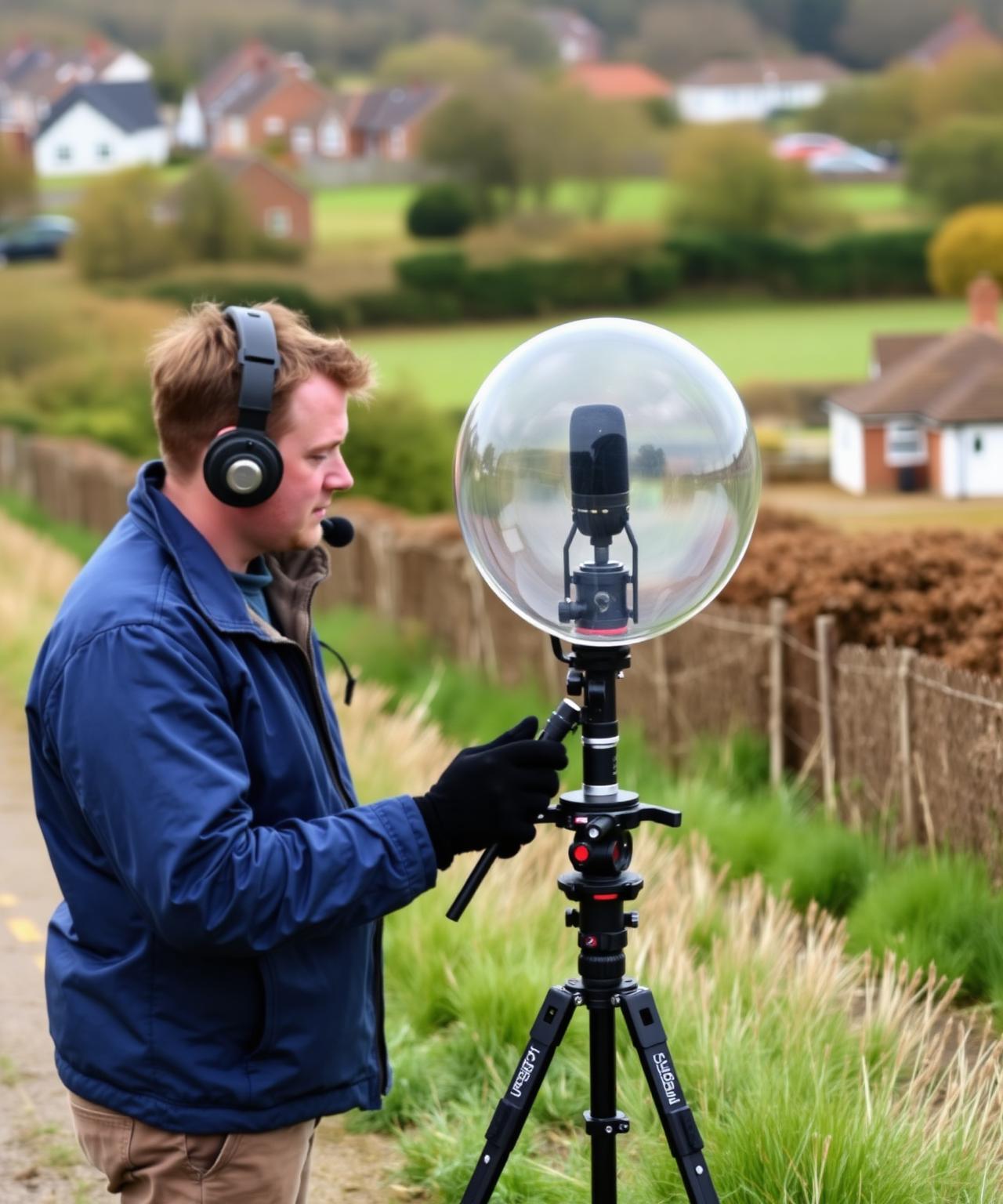
Boundary monitoring
Site perimeter · receptors
What it is
Noise where the site meets the community
A boundary noise assessment focuses on the line where the site meets its neighbours. It is the most direct way to answer questions about complaint response, planning compliance, permit reporting and noise management plan effectiveness.
It complements broader environmental noise surveys, BS 4142 noise surveys and construction noise monitoring, and can be commissioned on its own where the central question is the boundary itself.
Scope
What the assessment covers
- Representative boundary positions
- Community receptor positions
- Daytime, evening and night periods
- Background (LA90) and ambient (LAeq) measurement
- Short-event (LAmax) characterisation
- Tonal and impulsive character
- Comparison with planning or permit limits
- Complaint context and source attribution
Metrics
Quantities reported
- LAeq per period
- LA90 background
- LAmax short events
- LCpeak where impulsive
- Tonal indicator presence
- Octave-band spectra where useful
Process
How the assessment is delivered
- 1
Scoping
Boundary route walk-through, receptor identification, agreement on framework and periods.
- 2
On-site monitoring
Calibrated outdoor measurement with windshield protection, at boundary and receptor positions across representative periods.
- 3
Source attribution
Identification of site contribution against background and unrelated community sources.
- 4
Assessment
Comparison with planning, permit or BS 4142 framework as appropriate.
- 5
Reporting
Decision-ready report with measurements, conclusions and mitigation recommendations.
Use cases
Typical use cases
- Complaint investigation and response
- Planning condition verification
- Environmental permit reporting
- Noise management plan input
- Pre-acquisition due diligence
- Verification after mitigation
- Periodic compliance reviews
Sources
Common boundary noise sources
- Plant rooms and utility yards
- HVAC and chiller compounds
- Compressors and generators
- Extraction and ventilation
- Loading bays and reversing alarms
- Mobile plant and shunting movements
- Production machinery audible at the boundary
Deliverables
What you receive
- Method and instrumentation statement
- Calibration record
- Period-by-period boundary results
- Receptor-position findings
- Source attribution narrative
- Mitigation and management recommendations
Mitigation
Practical mitigation considered
- Plant enclosure and silencer fitment
- Re-orientation of intakes / discharges
- Acoustic screens at the boundary
- Time-restriction of noisy activities
- Reversing-alarm review
- Operational scheduling
FAQ
Boundary noise assessment — frequently asked questions
What is a boundary noise assessment?+
A boundary noise assessment measures sound at or near the site boundary, and at community receptor locations where appropriate. It is used to characterise how a site sounds to its neighbours, to investigate complaints, and to verify that boundary or community noise limits are met.
How is it different from an environmental noise survey?+
An environmental noise survey is broader: receptor monitoring, framework assessment (BS 4142, planning, permit), source characterisation and reporting. A boundary noise assessment is the specific service focused on the site-boundary and community-receptor question — useful when that is the central concern.
When is a boundary assessment needed?+
When a complaint has been raised, when a planning condition specifies a boundary noise limit, when an environmental permit requires boundary monitoring, when a noise management plan is being put in place, or when a tenant or neighbour requires evidence of compliance.
What is measured?+
LAeq over relevant periods, LA90 background, LAmax short-event values and (where appropriate) octave-band spectra for tonal assessment. Daytime, evening and night periods are reported separately.
Where are measurements taken?+
At representative positions along the site boundary, with extra positions at the most exposed community receptor locations. Positions are documented with photographs and notes on the acoustic environment.
Does the report support compliance evidence?+
Yes. The report is structured so it can be relied on for planning compliance, permit reporting, complaint response or as part of a documented noise management plan.