
BS 4142 Noise Surveys
Rating level
Ls + corrections
Residential
Receptor-focused
Day & night
Period-by-period
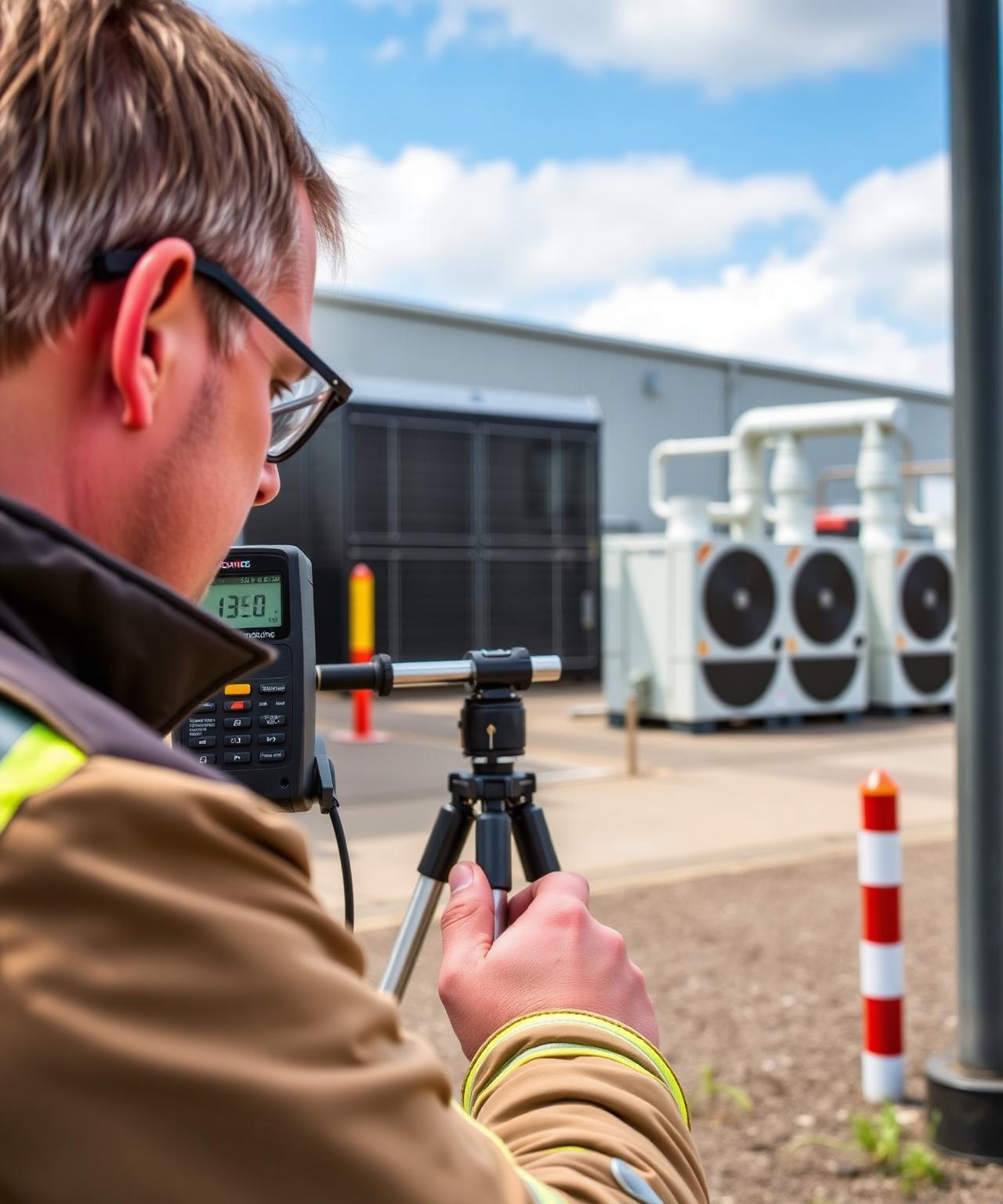
BS 4142 assessment
Industrial & commercial sound
What it is
BS 4142, applied competently
BS 4142:2014+A1:2019 is the UK methodology for rating and assessing industrial and commercial sound at residential receptors. Properly applied, it gives a defensible, repeatable indication of likely impact and a structured basis for mitigation.
BS 4142 work is closely related to wider environmental noise surveys and boundary noise assessment, but is a distinct service where BS 4142 specifically is the framework required.
Method
What BS 4142 requires
Specific sound (Ls)
Sound from the specific source at the receptor, measured under representative operating conditions.
Residual background (LA90,T)
Background at the receptor when the specific source is not present or not operating.
Character corrections
Additions for tonality, impulsivity, intermittency and 'other' character of the specific sound.
Rating level (Lr)
Ls plus corrections, compared with LA90,T for daytime and night-time periods.
Character corrections
Character corrections considered
- Tonality (subjective and 1/3-octave methods)
- Impulsivity (event character and onset)
- Intermittency (cyclic and burst character)
- 'Other' identifiable acoustic features
- Combined corrections appropriately documented
Process
How a BS 4142 survey is delivered
- 1
Scoping
Identification of the specific source, the receptor locations, the appropriate assessment periods and the expected character considerations.
- 2
Measurement
Calibrated outdoor measurement of specific sound and residual background, in representative periods, with full operating-condition records.
- 3
Character assessment
Tonality, impulsivity, intermittency and other character evaluated using objective methods where possible.
- 4
Rating
Ls plus corrections compared with LA90,T to derive the rating margin.
- 5
Reporting
BS 4142-structured report with conclusions on likely impact, context and mitigation.
Use cases
When BS 4142 is appropriate
- Industrial / commercial planning applications
- Environmental permit support
- Complaint investigation
- Plant or HVAC procurement justification
- Acquisition due diligence
- Verification after mitigation
Sources
Typical sources assessed under BS 4142
- Chillers and condensers
- HVAC plant rooms
- Compressor compounds
- Industrial extraction
- Loading-bay activity
- Reversing alarms and shunting
- Externally-audible production machinery
Reporting
BS 4142 reporting deliverables
- Method and BS 4142 framework statement
- Equipment and calibration record
- Specific sound and residual background results
- Character corrections and justification
- Rating level (day / night)
- Likely impact conclusion
- Mitigation and uncertainty narrative
FAQ
BS 4142 noise surveys — frequently asked questions
What is a BS 4142 noise survey?+
BS 4142:2014+A1:2019 is the British Standard 'Methods for rating and assessing industrial and commercial sound'. A BS 4142 survey applies the standard's methodology to assess the likely impact of industrial and commercial sound on residential receptors, producing a rating level for comparison against background sound.
When is BS 4142 the right framework?+
When the noise source is industrial or commercial — HVAC, chillers, compressors, plant rooms, extraction, loading bays, production machinery audible externally — and the receptors are residential. BS 4142 is not intended for transport noise, construction or entertainment venues.
What is the rating level?+
The rating level is the specific sound level (Ls) plus character corrections for tonality, impulsivity, intermittency and 'other' character. The rating level is then compared with the residual background (LA90,T) at the receptor location for daytime or night-time periods.
How are character corrections applied?+
Tonality, impulsivity, intermittency and 'other' character are each assessed objectively (where possible) and subjectively, and an appropriate decibel correction is added to the specific sound level. The standard sets out the corrections and the basis for selecting them.
What does the assessment conclude?+
Indication of likely impact: a rating level around the background suggests low impact; rating level above background by ~5 dB indicates adverse impact; ~10 dB indicates significant adverse impact. Context — including absolute levels and receptor character — informs interpretation.
Is BS 4142 enough for a planning application?+
BS 4142 is widely used in planning, but a planning application may also need BS 8233 internal-level assessment, WHO community noise guideline comparison or council-specific criteria. We scope to the receiving authority's expectations.